
The Digital Frontier Media Law and Ethics in 2026
The media landscape of 2026 is no longer just a "digital-first" world; it is a synthetic-first one. As generative AI becomes the primary architect of online content, the legal and ethical frameworks governing information have undergone their most radical transformation in decades.
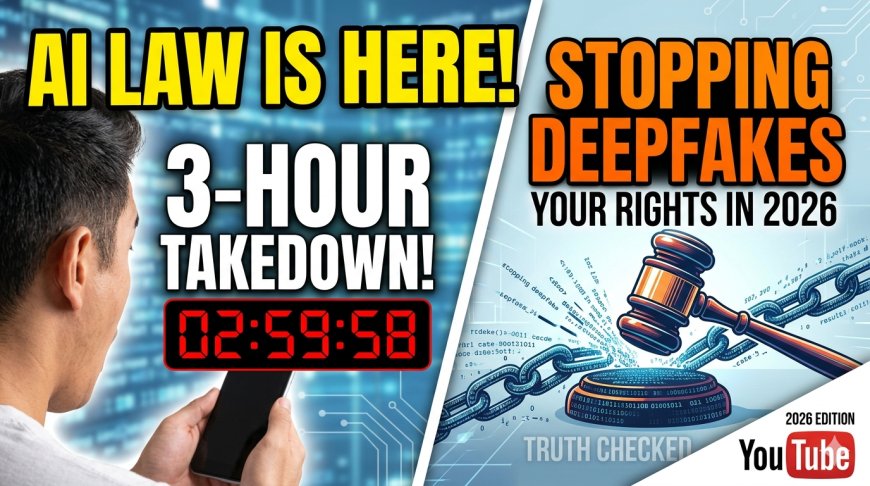
1. The Rise of "Synthetic Law": Regulating AI and Deepfakes
The most significant shift in 2026 is the transition from voluntary AI labeling to statutory transparency. Governments worldwide have moved to curb the "Liar’s Dividend"—where the prevalence of fakes allows real events to be dismissed as fabrications.
-
Mandatory AI Labeling: Following the landmark 2026 amendments to digital media codes (such as India’s IT Rules and the EU’s AI Act enforcement), platforms must now prominently label "Synthetically Generated Information" (SGI).
-
The 3-Hour Takedown Rule: In a bid to stop viral misinformation before it peaks, regulators have slashed compliance windows. For high-risk content like non-consensual deepfake nudity or forged government documents, platforms are often legally required to remove content within 3 hours of a court or government order.
-
Technical Traceability: "Visible watermarks" are no longer enough. Law now mandates embedded metadata—digital DNA that allows investigators to trace a piece of content back to its source AI model.
2. Defamation in the Age of Algorithms
Defamation law is moving away from the era of "tactical litigation" and toward a focus on demonstrable harm.
-
The "Serious Harm" Test: Many jurisdictions have introduced a higher threshold for corporate plaintiffs. Companies can no longer sue simply for "hurt feelings" or reputation; they must prove that a publication caused, or is likely to cause, serious financial loss.
-
Abolition of Juries: To improve predictability and reduce astronomical "emotional distress" payouts, several regions have moved defamation cases exclusively to judges. This shift aims to create a more consistent legal standard for journalists and social media users alike.
-
Anti-SLAPP Protections: 2026 marks a victory for investigative journalism with the widespread adoption of Anti-SLAPP (Strategic Lawsuits Against Public Participation) laws. These allow judges to quickly dismiss meritless lawsuits designed to silence public watchdogs.
3. The Ethical Pivot: From Reach to Authenticity
Ethics in 2026 are defined by a "flight to quality." As AI-generated "pink slime" (low-quality, automated news sites) saturates the web, the ethical burden on human journalists has shifted.
| Ethical Challenge | 2026 Response |
| AI Slop | Newsrooms are doubling down on "IRL" (In Real Life) reporting—journalism that cannot be scraped or summarized by a bot. |
| Algorithmic Bias | Transparency is the new standard. Media houses must now disclose when algorithms, rather than editors, determine the "Top Stories" for a user. |
| The Creator Wave | Influencers and independent "personality-led" news outlets are now subject to the same ethical codes as traditional broadcasters to prevent unregulated misinformation. |
4. Privacy and the "Right to be Human"
In a world of ubiquitous surveillance and AI scraping, privacy law has reached a breaking point.
Key Trend: The "Right to Authenticity." This emerging legal concept protects individuals from having their likeness, voice, or "digital essence" used by AI without explicit consent—even if the resulting content isn't technically defamatory.
Digital "detox" and "Appstinence" have moved from niche trends to a broader societal movement. Ethically, media organizations are being pressured to respect "quiet zones"—digital spaces where user data is not harvested for targeted advertising.
Conclusion: The New Social Contract
Media law and ethics in 2026 are no longer just about what you say, but how it was made and who (or what) said it. The "Wild West" of the early 2020s has been replaced by a high-stakes environment where speed of removal and transparency of origin are the two pillars of digital survival. For the modern creator, the message is clear: in an era of infinite fakes, authenticity is your most valuable—and legally protected—asset.
What's Your Reaction?
 Like
0
Like
0
 Dislike
0
Dislike
0
 Love
0
Love
0
 Funny
0
Funny
0
 Wow
0
Wow
0
 Sad
0
Sad
0
 Angry
0
Angry
0










Comments (0)